Keywords
critical care
E-learning
YouTube
Categories
How to Cite
Abstract
Background: Research on anaesthesiology trainees’ e-learning usage and needs are limited. This study explores e-learning preferences among University of Malaya anaesthesiology trainees, global engagement of an anaesthesiology YouTube channel, and comparisons between local and global trends.
Methods: A cross-sectional survey was conducted among University of Malaya anaesthesiology trainees in mid-2024 using a modified Matava questionnaire. YouTube analytics from 319 educational videos on @ForeverLearningAnaes (FLA) were analysed. Statistical analysis was performed using IBM SPSS version 29.
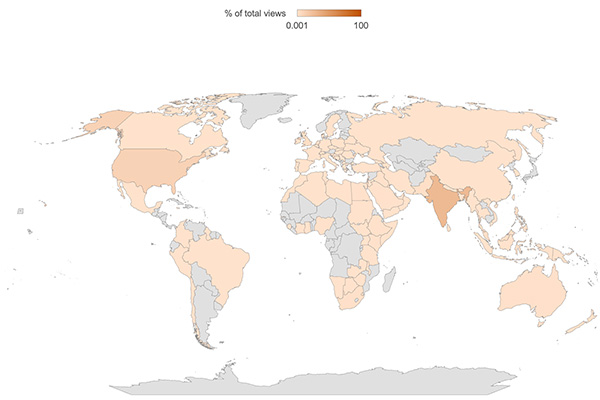
Results: The survey demonstrated satisfactory validity (ICC: 0.678–0.994; Cronbach’s alpha: 0.689–0.994), with a 90.3% response rate (n = 75). Preferred e-learning formats included e-books, videos, slide-based courses, and quizzes. Trainees spent significantly more time on e-learning than traditional learning, with first-year trainees dedicating the most study hours. Smartphones, tablets, and laptops were the primary devices used. Key motivations for e-learning included exam preparation, case management, and acquiring new knowledge. The most valued features were flexibility in time, place, and pace of learning. NYSORA Education was the highest-rated YouTube channel. Preferred video duration was 5–15 minutes. The 3 most desired e-learning content types were procedural skills, practice exam questions and answers, and journal article summaries. FLA videos reached 97 countries, primarily lower-middle-income nations, with mobile phones as the dominant viewing device. Clinical/procedural videos had higher engagement than basic sciences videos. The average view duration per video for FLA viewers was approximately 3 minutes.
Conclusion: These findings can inform educators in developing digital learning resources to support self-paced, lifelong learning for anaesthesiology trainees globally.
References
Shoufan A, Mohamed F. YouTube and education: A scoping review. IEEE Access. 2022;10:125576-125599. https://doi.org/10.1109/ACCESS.2022.3225419
Matava CT, Rosen D, Siu E, et al. Elearning among Canadian anaesthesia residents: A survey of podcast use and content needs. BMC Med Educ. 2013;13:59. https://doi.org/10.1186/1472-6920-13-59
Shih YCD, Liu CC, Chang CC, et al. Effects of digital learning in anaesthesiology. Eur J Anaesthesiol. 2020;38(2):171-182. https://doi.org/10.1097/eja.0000000000001262
ForeverLearningAnaes [Internet]. YouTube; [cited 2025 Mar 31]. Available from: https://www.youtube.com/@ForeverLearningAnaes.
Fisher S. How to create an effective survey [Internet]. Qualtrics; 2023 Aug 15 [cited 2025 Mar 31]. Available from: https://www.qualtrics.com/blog/how-to-create-a-survey/.
Mohamad AB, Hon YK, Lee KY. A step-by-step guide to questionnaire validation research. Kuala Lumpur, Malaysia: Institute for Clinical Research, NIH MY; 2022. https://doi.org/10.5281/zenodo.6801208
Google. Check your YouTube analytics data - YouTube help [Internet]. Google; 2023 [cited 2025 Mar 31]. Available from: https://support.google.com/youtube/answer/6085583?hl=en&sjid=16118220471808188180-AP.
Desai S, Patel N. ABC of face validity for questionnaire. Int J Pharm Sci Rev Res. 2020;65(1):164-168. https://doi.org/10.21315/eimj2019.11.3.6
Koo TK, Li MY. A guideline of selecting and reporting intraclass correlation coefficients for reliability research. J Chiropr Med. 2016;15(2):155-163. https://doi.org/10.1016/j.jcm.2016.02.012
Tavakol M, Dennick R. Making sense of cronbach’s alpha. Int J Med Educ. 2011;2:53-55. https://doi.org/10.5116/ijme.4dfb.8dfd
World Bank. World Bank Country and Lending Groups – World Bank Data Help Desk [Internet]. 2024 [cited 2025 Mar 31]. Available from: https://datahelpdesk.worldbank.org/knowledgebase/articles/906519-world-bank-country-and-lending-groups.
Pokharel R, Bhatta D. Classifying YouTube comments based on sentiment and type of sentence [Internet]. arXiv; 2021 [cited 2025 Mar 31]. Available from: https://arxiv.org.
Fincham JE. Response rates and responsiveness for surveys, standards, and the Journal. Am J Pharm Educ. 2008;72(2):43. https://doi.org/10.5688/aj720243
Schroeder A, Minocha S, Schneider C. The strengths, weaknesses, opportunities, and threats of using social software in higher and further education teaching and learning. J Comput Assist Learn. 2010;26(3):159-174. https://doi.org/10.1111/j.1365-2729.2010.00347.x
Rahman NA, Ng HJ, Rajaratnam V. Big data analysis of a dedicated Youtube channel as an open educational resource in hand surgery. Front Appl Math Stat. 2021;7:593205. https://doi.org/10.3389/fams.2021.593205
Lee CS, Osop H, Goh DHL, et al. Making sense of comments on YouTube educational videos: A self directed learning perspective. Online Inf Rev. 2017;41(4):611-625. https://doi.org/10.1108/OIR-09-2016-0274
Gupta B, Singh V, Gupta N. Perception of anaesthesiology residents about the effectiveness of online learning: An exploratory observational study. Vendangam-A Multidiscip J High Educ. 2022;1(1):15-23.
Tackett S, Slinn K, Marshall T, et al. Medical education videos for the world: An analysis of viewing patterns for a YouTube channel. Acad Med. 2018;93(8):1150-1156. https://doi.org/10.1097/acm.0000000000002118.
Srinivasa K, Chen Y, Henning MA. The role of online videos in teaching procedural skills to post-graduate medical learners: A systematic narrative review. Med Teach. 2020;42(6):689-697. https://doi.org/10.1080/0142159X.2020.1733507.
Maynard AD. How to succeed as an academic on YouTube. Front Commun. 2021;5:130. https://doi.org/10.3389/fcomm.2020.572181.
Mayer RE. Incorporating motivation into multimedia learning. Learn Instr. 2014;29:171-173. https://doi.org/10.1016/j.learninstruc.2013.04.003.

This work is licensed under a Creative Commons Attribution-NonCommercial-ShareAlike 4.0 International License.
Copyright (c) 2025 Philip Yi Shean Chua, Kevin Wei Shan Ng