Keywords
combined spinal-epidural anaesthesia
ex-utero intrapartum treatment (EXIT)
foetal goitre
Graves’ disease
Categories
How to Cite
Abstract
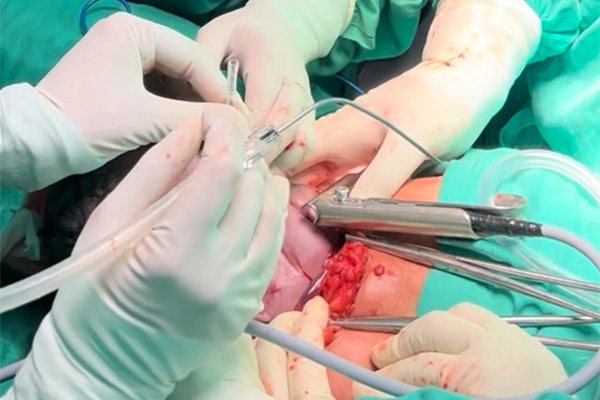
The ex-utero intrapartum treatment (EXIT) procedure is a rare, but lifesaving intervention performed during a Caesarean section to enable controlled foetal airway and other intrapartum procedures. Its main goal is to secure the foetal airway while maintaining utero-placental circulation, preventing airway obstruction at birth. The EXIT procedure is preferred in conditions such as congenital high airway obstruction syndrome and airway compression from neck or thoracic masses. This case report details the management of a 22-year-old primigravida with Graves’ disease whose foetus was diagnosed with an anterior neck mass consistent with thyroid goitre. Antenatal ultrasound and magnetic resonance imaging confirmed a lesion anterior to the trachea. After multidisciplinary discussion between the obstetrician, obstetric anaesthesiologist, and paediatric otorhinolaryngology teams, an emergency Caesarean section with an EXIT procedure was performed at 37 weeks and 3 days. Anaesthesia was provided using a combined spinal-epidural technique. Nitroglycerin facilitated uterine relaxation, and phenylephrine maintained maternal hemodynamic stability. Foetal tracheal intubation was successfully performed under direct laryngoscopy while placental circulation was preserved. This case highlights the success of combined spinal-epidural anaesthesia in avoiding a potential high-risk airway complication to the mother and secure the foetal airway while oxygenating the foetus via the placenta.
References
Léger J. Management of fetal and neonatal graves’ disease. Horm Res Paediatr. 2016;87(1):1–6. https://doi.10.1159/000453065
George RB, Melnick AH, Rose EC, Habib AS. Case series: Combined spinal epidural anesthesia for Cesarean delivery and ex utero intrapartum treatment procedure. Can J Anesth. 2007;54(3):218–222. https://doi.org/10.1007/bf03022643
Karanth SK, Tran KM. Anaesthesia for foetal interventions. Anaesthesia Tutorial of the Week (ATOTW 532). 2024. https://doi.org/10.28923/atotw.53
Kumar K, Miron C, Singh SI. Maternal anesthesia for EXIT procedure: A systematic review of literature. J Anaesthesiol Clin Pharmacol. 2019;35(1):19–24. https://doi.org/10.4103/joacp.joacp_302_17
Wang W, Pei L, Zhang Y, Chen W, Liu J, Jiang Y, et al. Neuraxial anesthesia in ex utero intrapartum therapy for parturients with fetal congenital diaphragmatic hernia: a prospective observational study. Int J Obstet Anesth. 2022;52:103599. https://doi.org/10.1016/j.ijoa.2022.103599
Dinges E, Ortiz J, d’Oria V, Bernstein K, Landau R, Chollat C, et al. Multimodal general anesthesia approach for ex utero intrapartum therapy (EXIT) procedures: Two case reports. Int J Obstet Anesth. 2019;38:142–145. https://doi.org/10.1016/j.ijoa.2018.08.009
Gaffuri M, Raffaeli G, Bullejos Garcia EE, Perugino G, Cassardo O, Persico N, et al. The ex-utero intrapartum treatment procedure: A narrative review. Front Pediatr. 2025;13:1601963. https://doi.org/10.3389/fped.2025.1601963
Bouchard S, Johnson MP, Flake AW, Howell LJ, Myers LB, Adzick NS, et al. The EXIT procedure: experience and outcome in 31 cases. J Pediatr Surg. 2002;37(3):418–426. https://doi.org/10.1053/jpsu.2002.30839
Pattaravit N, Karnjanawanichkul O, Benjhawaleemas P. Successful management of Ex-Utero intrapartum treatment procedure for Cystic Teratoma under Sole Spinal Anesthesia: An anesthetic challenge case report. J Health Sci Med Res. 2022;40(6). https://doi.10.31584/jhsmr.2022899
Benonis JG, Habib AS. Ex utero intrapartum treatment procedure in a patient with arthrogryposis multiplex congenita, using continuous spinal anesthesia and intravenous nitroglycerin for uterine relaxation. Int J Obstet Anesth. 2008;17(1):53–56. https://doi.org/10.1016/j.ijoa.2007.01.007

This work is licensed under a Creative Commons Attribution-NonCommercial-ShareAlike 4.0 International License.
Copyright (c) 2026 Siti Nadzirah Saad